
Air Pollution Costs 5% of Global GDP. Funders Are Barely Paying Attention
A new UNDP report has put a number on something most people have always suspected but never quite added up: air pollution is costing the world economy roughly 5% of global GDP every year, and the funding flowing toward fixing it amounts to about 1% of development finance. That's not a rounding error. That's a structural choice.
Global GDP currently sits above $100 trillion. Five percent of that is more than $5 trillion a year, drained through hospital bills, lost working hours, lower crop yields, and the slower thinking that comes from breathing bad air for years. The 1% of development funding directed at air quality works out to a few tens of billions annually. The arithmetic is brutal.
Why this shows up in your paycheck, not just your lungs
Air pollution costs GDP through channels that sound abstract until you trace them to your own finances. Productivity falls when workers are sick more often or cognitively impaired by chronic exposure to particulates. Insurance and healthcare costs rise, and employers eventually pass that on in wages or prices. Governments spend more on emergency health services, which means less money for schools, roads, or the tax cuts everyone keeps waiting for.
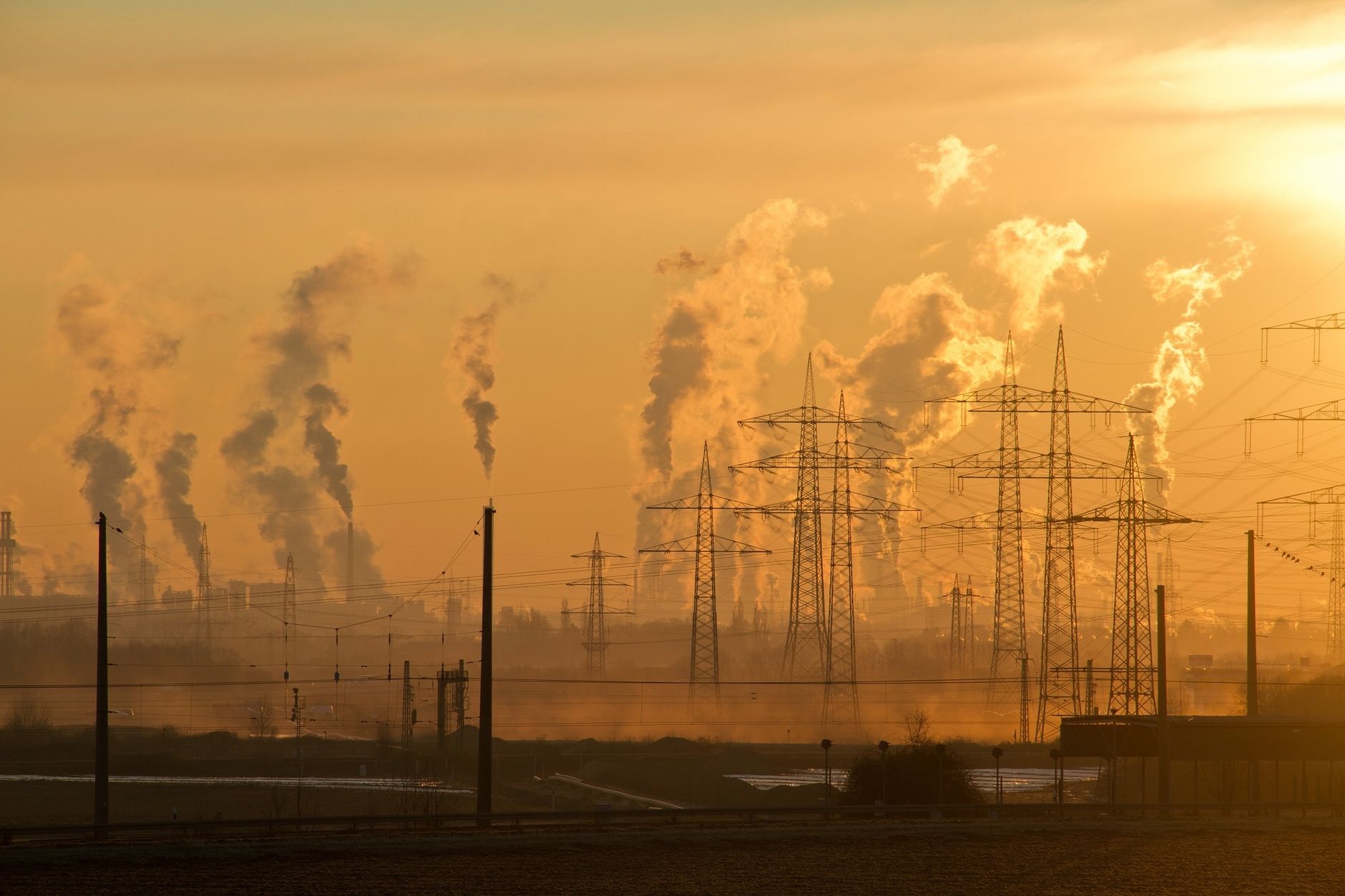
In lower-income countries, where outdoor burning and older industrial equipment are most common, the drag is even sharper. The World Bank has linked heavy pollution exposure to measurable drops in test scores and lifetime earnings. A city running on coal-fired power and diesel trucks is, in a very literal sense, burning its own human capital.
If you hold emerging-market equity funds or bonds, this matters to you directly. Countries that carry a heavy pollution burden tend to grow more slowly than their other fundamentals would predict, and that drag shows up in equity returns over a decade.
How the funding gap opened up
Climate finance, over the past fifteen years, has concentrated heavily on cutting carbon emissions — solar panels, wind farms, electric-vehicle subsidies. That's not wrong, but it squeezed out a related problem that doesn't photograph as dramatically as a melting glacier. Dirty air kills about seven million people a year, according to the World Health Organization, yet it rarely gets the headline treatment of a flood or a wildfire.
Development banks and donor governments have tended to fund what they can measure and report in neat carbon-credit terms. Air quality improvements are harder to quantify in a spreadsheet that a donor parliament can vote on. So the money went elsewhere.
The UNDP report is essentially saying that was a costly mistake, and the bill is now visible enough to read clearly.
The number most coverage is skipping
Five trillion dollars a year sounds enormous, but the more revealing figure is the return on investment if that gap were closed. Clean-air interventions — catalytic converters on heavy trucks, cleaner cooking fuels for households, industrial emissions filters — tend to pay back several dollars in avoided healthcare costs for every dollar spent. The London School of Hygiene and Tropical Medicine has estimated ratios above 30-to-1 in some low-income settings.
That's a better return than most infrastructure bonds, and the payback period is short enough to show up in a government budget within a decade. The problem isn't the economics. The problem is that the upfront cost lands on one ministry's books while the savings accrue to a different one, or to employers, or to households. Nobody writes a check for diffuse benefits.
The risk worth keeping in mind: the UNDP figure is a modeled estimate, not a direct measurement. GDP impact from pollution is genuinely hard to isolate from other factors like conflict, governance, or commodity prices. The 5% headline may be on the high end. Even if the true number is 3%, it still dwarfs the funding response.
Where this goes next depends a lot on whether development banks treat air quality the way they've started treating climate adaptation — as an economic necessity, not a charity project. The Inter-American Development Bank and the Asian Development Bank have both signaled interest in expanding clean-air lending. Whether that translates into actual disbursements, and at what scale, is the thing to track over the next year or two.
For investors, the practical read is straightforward: funds and bonds tied to clean-air infrastructure are likely to attract more institutional capital as this framing takes hold. That doesn't make every green bond a buy, but it shifts the direction of policy money in a way that's worth factoring into a long view.
A few quick answers
Does this mean pollution is a bigger economic problem than climate change?
Not exactly — they overlap heavily, since burning fossil fuels drives both. But air pollution kills people faster and hits productivity in ways that show up in GDP within years, not decades. The UNDP argument is that the urgency of the health impact hasn't been matched by the funding response the way climate has been.
Should you move money into clean-air stocks or ETFs based on this?
The report strengthens a longer-term tailwind for environmental infrastructure stocks and development-bank green bonds, but no single report moves markets that much on its own. If you already hold a diversified green or ESG allocation, this reinforces that thesis. Buying on a single headline is just noise with a ticker attached, not a plan.
Over the next few months, watch whether major multilateral lenders start announcing dedicated air-quality lending facilities. That's when the funding narrative stops being a report and starts being a market signal.