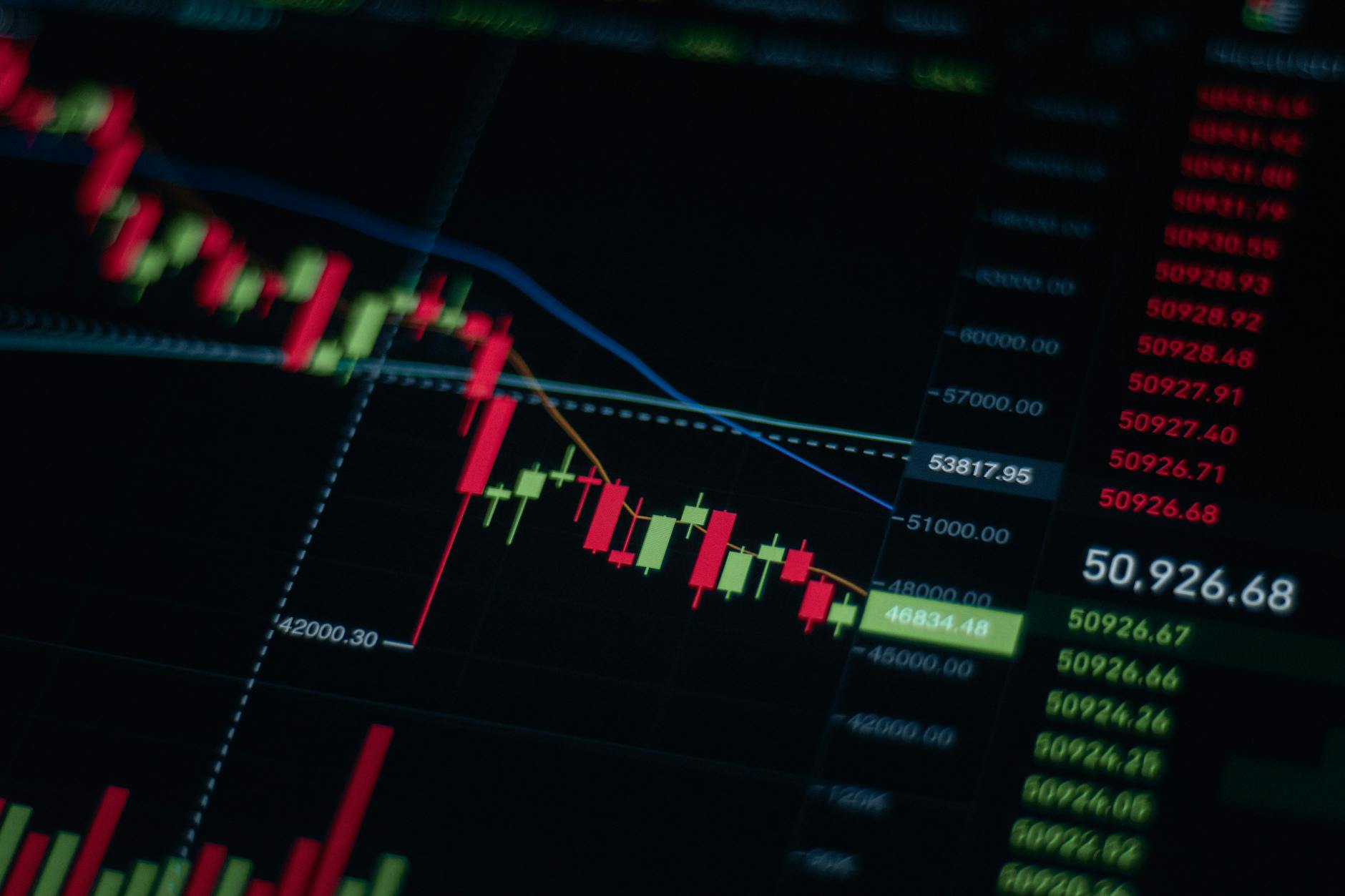
Sensex Jumps 500 Points: Should You Cheer or Be Cautious?
So, the Sensex jumps 500 points today. That's a decent leap, right? It essentially means the Indian stock market, particularly the 30 big companies that make up the Sensex, had a really good morning, and the overall mood is upbeat. For you, the everyday investor, it could mean your existing investments are looking healthier, or it might just be another day in the market's endless dance.
Now, before we all start popping the celebratory chai, let's break down what this actually means beyond the headlines. We've seen the Nifty50 also open strong, pushing past 23,259. Companies like IndiGo and Tata Motors PV are doing well. It's easy to get swept up in the excitement, but a smart investor knows to look a little deeper. Is this a sustainable trend, or just a temporary bounce?
Why Are Markets Feeling So Good Right Now?
Today's buzz about the Sensex jumps 500 points isn't happening in a vacuum. The news channels are all talking about 'positive global cues.' What does that even mean in plain Hindi? Think of it this way: what happens in big economies like the US, Europe, or China often ripples across the world. If those economies are showing signs of growth, or if there's good news on the inflation front, or if interest rates seem to be stabilising globally, investors everywhere tend to feel more confident.
For instance, there's been some chatter about the US Federal Reserve's stance on interest rates. If the signals suggest they might cut rates later this year, it usually makes borrowing cheaper, which is good for businesses and consumers. Cheaper money means companies can expand more easily, and people are more likely to spend. That translates to better company profits, and ultimately, higher stock prices.
Another factor often at play is foreign institutional investment (FII). When global investors see India as a promising market – perhaps because of strong economic data, stable government policies, or a growing consumer base – they pump money into our stocks. This inflow of capital provides a significant boost to market sentiment and stock prices. It's like a big wave coming in and lifting all the boats.
Domestic institutional investors (DIIs), like mutual funds and insurance companies, also play a huge role. They manage the money you invest in your SIPs and insurance plans. When they see good opportunities or a positive outlook, they invest more, adding to the market's upward momentum. It's a mix of big global money and our own local giants pushing the indices higher.
A Quick Look Back: When Big Jumps Felt Different
Historically, big market movements aren't new. Remember the post-election rallies we've seen, or the sharp rebounds after a global crisis like the 2020 pandemic? Each time, the Sensex saw significant jumps or drops. Back in the early 2000s, a 500-point jump on the Sensex was considered a monumental event, often making front-page news for days. The Sensex itself was much lower then, so a 500-point move was a much larger percentage gain. It was a bigger deal.
Today, with the Sensex hovering around much higher levels (we're talking well over 70,000 points now), a 500-point gain, while certainly good, is a smaller percentage move. It's still positive, no doubt, but the sheer scale of the market has changed. This means we need to adjust our perspective. What felt like a 'massive' gain two decades ago might now be a 'strong' gain. It's all relative to the base.
Think of it like this: if you earned ₹100, and someone gave you ₹50, that's a 50% raise. Huge! But if you earn ₹1,000, and someone gives you ₹50, it's a 5% raise. Still good, but not as dramatic. The absolute numbers can sometimes be deceptive without context. This isn't to downplay today's performance, but to remind us that the market's journey is long, and these daily swings are part of the ride.
The Anatomy of a Market Surge
When the Sensex jumps 500 points, it's not just a random number. It's the weighted average of how the share prices of those 30 big companies have moved. Each company has a different 'weight' in the index, usually based on its market capitalisation (its total value). So, a big jump in a heavily weighted stock like Reliance Industries or HDFC Bank can have a much larger impact than a similar jump in a smaller Sensex component.
Today, we're seeing specific sectors doing well. IndiGo's parent company, InterGlobe Aviation, is a gainer. This suggests renewed confidence in the travel and aviation sector, perhaps due to improving consumer spending or more stable fuel prices. Tata Motors PV (Passenger Vehicles) doing well points to a robust domestic auto demand, which is a good sign for the broader economy. These aren't just isolated incidents; they're indicators of underlying economic health or investor sentiment towards particular industries.
Who Actually Benefits When the Sensex Jumps 500 Points?
Okay, so the Sensex is up. Great. But who actually gets to feel that good vibe in their wallet?
-
Existing Investors (especially those holding blue-chips): If you've already invested in the 30 companies that make up the Sensex, or in large-cap mutual funds that track these indices, you're likely seeing a nice bump in your portfolio value. This is where the 'paper gains' come in. Your investments are worth more, at least for now.
-
Long-Term SIP Investors: For those faithfully doing their Systematic Investment Plans (SIPs), a day like this adds to the overall value. While SIPs are designed to average out market volatility over time, seeing your total investment value grow on an up day is always encouraging. It's a little psychological boost to keep you going.
-
Companies Themselves: The companies whose stock prices are rising benefit too. A higher stock price can make it easier for them to raise capital, use their shares for mergers and acquisitions, and generally project an image of strength and growth. It's good for employee morale, too.
-
The Economy (Indirectly): A rising market often reflects investor confidence in the economy. This confidence can lead to more investment, job creation, and overall economic activity. It's a virtuous cycle, at least in theory.
And Who Doesn't Win So Much?
It's not all sunshine and rainbows for everyone, of course:
-
New Investors (considering buying): If you were just about to jump into the market, a sudden surge means you might have to buy at a higher price. This can sometimes lead to 'fear of missing out' (FOMO) and impulsive buying, which isn't always the best strategy.
-
Short Sellers: These are investors who bet on stock prices falling. A sharp rise like today means they're likely losing money, and could face significant losses if the trend continues.
-
People with Debt: While not directly affected by stock gains, a strong market can sometimes signal future inflation or interest rate hikes, which could make existing loans more expensive. This is a broader economic point, but worth considering.
Practical Steps for the Small Investor Amidst Market Swings
So, the Sensex jumps 500 points. What should you do about it? Probably not much, if you're a sensible, long-term investor. Here's why, and what you should be doing:
1. Don't Panic Buy (or Sell)
This is the golden rule. Seeing green numbers can be exhilarating, but it's rarely a good idea to suddenly pour all your savings into the market just because it's up today. Similarly, don't panic-sell just because it dipped yesterday. Market movements are daily. Your financial goals are long-term. Stay disciplined.
2. Stick to Your SIPs
If you have SIPs running, keep them going. The beauty of SIPs is rupee-cost averaging. You buy more units when the market is down and fewer when it's up. Today's gain means your existing units are worth more, but your next SIP contribution will buy slightly fewer units. It all balances out over time. A friend of mine, a chai-shop owner, started a ₹500 SIP years ago and never missed a payment, through all the ups and downs. He barely looks at the daily market, and his portfolio has steadily grown.
3. Rebalance Your Portfolio (If Needed)
If your portfolio has become too heavily weighted towards equities because of recent gains, it might be a good time to rebalance. This means selling some of your appreciated stocks/funds and moving that money into other asset classes like debt, gold, or even fixed deposits, to bring your allocation back to your original target. This reduces risk and helps you lock in some profits.
4. Review Your Goals, Not Just Daily Returns
Are you saving for a house down payment in three years? Your child's education in ten? Retirement in twenty? Your investment strategy should align with these goals. A single day's market movement, even a big one, rarely changes your fundamental long-term plan. Use these moments to check if your investments are still on track for your goals, not just to see how much they went up today.
5. Understand What You Own
If you're investing directly in stocks, do you know why those specific companies are doing well? IndiGo's rise might be about renewed travel demand, but what about its debt levels or competition? Tata Motors PV doing well could be about new models or market share gains. Understanding the fundamentals of your investments is far more important than reacting to daily price swings.
6. Diversify, Diversify, Diversify
Never put all your eggs in one basket. Even if the Sensex is doing great, make sure your portfolio is diversified across different sectors, company sizes (large-cap, mid-cap, small-cap), and asset classes. This protects you when one sector or company underperforms.
What are 'Global Cues' Anyway, and Why Do They Matter So Much?
When financial news mentions 'positive global cues,' they're talking about a mix of international economic and political factors that influence investor sentiment worldwide. It's like a global weather report for money. If the weather's good in one big region, it often signals good sailing for others.
These cues can include:
- US Federal Reserve's Interest Rate Decisions: The US Fed is a giant. What it does with interest rates impacts global liquidity and capital flows. A hint of rate cuts, for example, makes investors more willing to take risks, often sending money to emerging markets like India.
- Economic Data from Major Economies: Strong GDP growth, low unemployment, or contained inflation numbers from the US, Europe, or China signal a healthy global economy, which generally benefits export-oriented economies and boosts corporate earnings.
- Geopolitical Stability: Wars, trade disputes, or political instability in any major region can make investors nervous, leading them to pull money out of riskier assets. Conversely, signs of stability reassure them.
- Commodity Prices: Global oil prices, for instance, directly impact India, a major oil importer. Lower oil prices are usually a big positive for our economy and corporate profits, and vice versa. Similarly, metal prices, agricultural commodities – they all play a role.
So, when the Sensex jumps 500 points, and the analysts say 'global cues,' they're essentially saying the big international picture looks favourable, making investors feel better about putting their money into Indian stocks.
Frequently Asked Questions About Market Movements
Is a 500-point Sensex jump a big deal for my SIP?
For a single day, a 500-point Sensex jump is significant, but its impact on your long-term SIP is usually minimal. SIPs are designed to average out your purchase price over many months and years. While your existing investments will show a nice gain today, the real power of SIP comes from consistent investing through all market cycles, not just reacting to daily moves. Don't worry about one day's jump; focus on your consistent contributions.
Should I invest more money when the Sensex is rising like this?
It depends on your investment strategy and risk tolerance, but generally, chasing a rising market with a lump sum isn't always the best approach. It can be tempting to jump in, but buying high means your potential for future gains might be lower. It's often wiser to stick to your planned investment schedule (like SIPs) or invest when corrections offer better value, rather than getting caught up in the hype of a single strong day. Always consult a financial advisor if you're unsure.
How long do these market rallies usually last?
There's no fixed timeline for how long market rallies last. Some can be short-lived, lasting only a few days or weeks, while others can signal the start of a longer bull run, extending for months or even years. It all depends on the underlying economic fundamentals, corporate earnings, interest rate environment, and global investor sentiment. Daily jumps are often reactions to specific news or short-term trends, so it's best to maintain a long-term perspective and avoid trying to time the market.
What are the risks of investing when the Sensex is high?
When the Sensex is at higher levels, the primary risk is that stocks might be overvalued. This means you could be buying into companies at prices that don't fully reflect their intrinsic worth, potentially limiting your future returns. If the market corrects (falls) after you've invested at a peak, you could see your portfolio value drop in the short term. This is why diversification and a long-term approach are crucial. Don't get caught up in the euphoria; always do your homework or consult an expert. Investing is a marathon, not a sprint, especially when the Sensex jumps 500 points on a given day.